
How to read a pants size chart
Compare waist, rise, inseam and leg opening measurements before choosing pants. Learn what to clarify when the seller’s chart or measurement method is unclear.
Choose pants by comparing measurements, not only the size letter. Use a pair you already own that fits well, measure it in the same way as the seller, and compare it with the chart for your selected model.
Read the measurement labels
| Measurement | What to clarify |
|---|---|
| Waist | Flat width or full circumference; relaxed or stretched for elastic waists |
| Rise | The measurement from the crotch seam toward the waistband |
| Inseam | The inside-leg measurement from crotch to hem |
| Total length | The measurement from waistband to hem |
| Leg opening | Width or circumference at the hem |
Check whether the chart measures the garment or describes body measurements. Ask for clarification when the method is not stated.
Measure a pair that already fits
Fasten the waistband and lay the pants flat without stretching the fabric. Smooth the legs gently. Measure the waist straight across, the inseam along the inside leg from the crotch seam to the hem, and the rise from the crotch seam to the top of the waistband. Record which side you measured: front and back rise are different.
For the thigh, use the same distance below the crotch as the seller. For the hem, measure the opening flat. Avoid comparing a stretched elastic waist with a relaxed chart value. If the seller does not describe the measurement points, ask before interpreting a small difference.
Worked example: why the waist is not enough
These are hypothetical garment measurements in centimetres, not a size recommendation for a listed product.
| Measurement | Your comfortable pair | Seller option A | Seller option B |
|---|---|---|---|
| Flat waist | 40 | 40 | 42 |
| Inseam | 74 | 78 | 78 |
| Front rise | 29 | 26 | 28 |
| Flat thigh at the same point | 31 | 29 | 31 |
Option A matches the waist but has a longer leg, lower rise and narrower thigh. Choosing it on waist alone could miss the fit you wanted. Option B is closer in the thigh and rise but wider at the waist; it is not automatically the better choice. Decide which differences you can accept or look for another cut. A flat waist of 40 cm corresponds approximately to an 80 cm garment circumference; that figure describes the garment, not your body.
Compare the cut as well as length
Two pairs can have similar waist measurements but different thigh width, rise and leg shape. Compare these details if you want a particular fit. Product photos can help show the cut, but a model’s appearance does not guarantee the same fit on you.
What this arrival photo can show
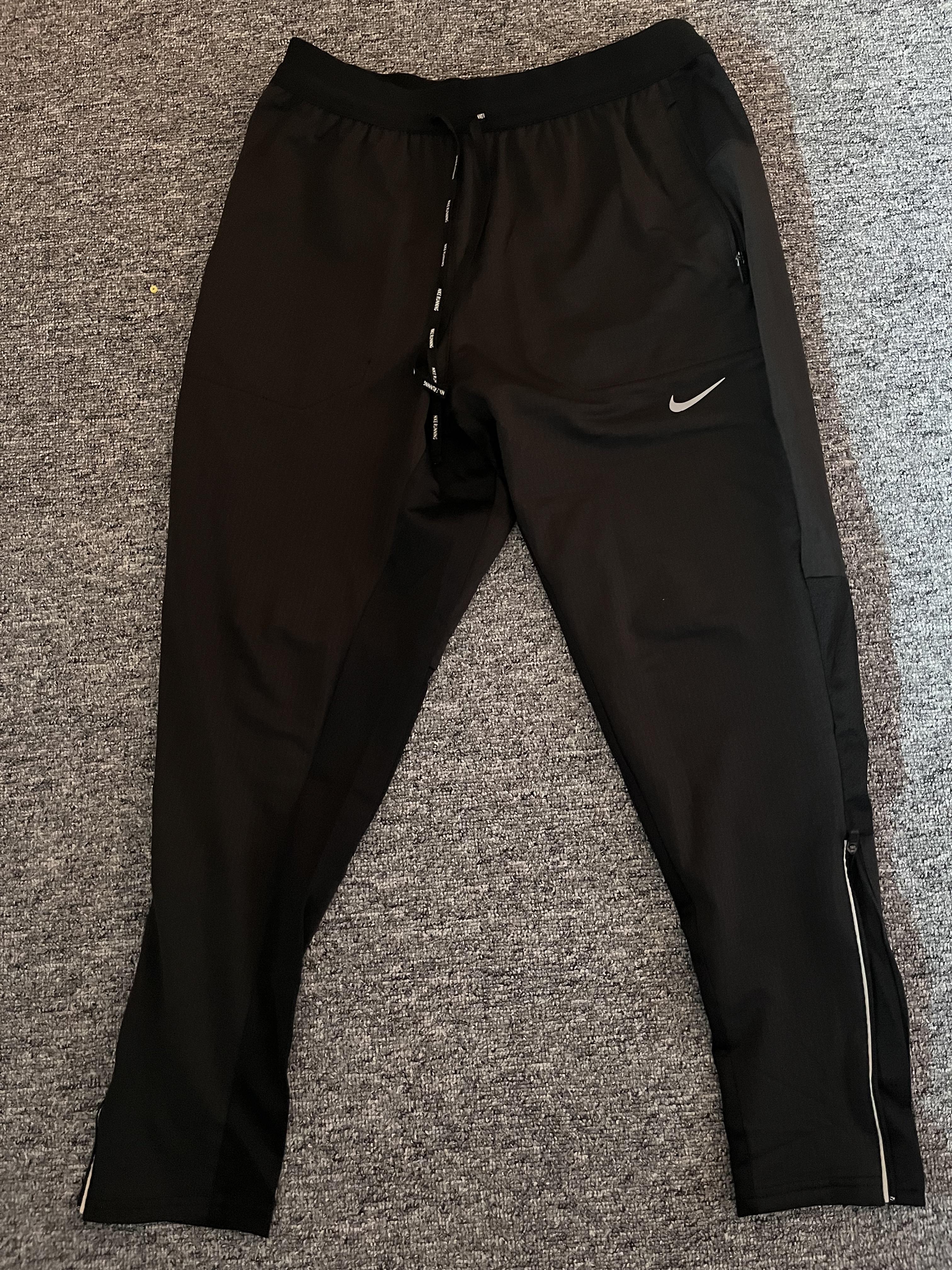
Buyer arrival photo from the Nike running clothing delivery. The waistband, pocket openings and lower-leg zippers are visible. There is no measuring tape, so this photo cannot establish the waist or inseam. The leg shape is useful context, but it cannot tell you how the pants will sit on your body.
Check the selected option
Match the model, colour and size on the product page before ordering. When the item reaches the warehouse, check the size label and visible construction. If you need a specific measurement photographed, confirm the request and available service. The warehouse photo guide explains extra photo requests.
If you are between sizes or the measurement differs
A larger size may increase several measurements together, rather than solving only a tight waist. Check the adjacent sizes and fabric information. Do not rely on an elastic waistband to compensate for a narrow thigh or an unsuitable rise.
If a warehouse measurement appears different, first confirm the method and ask for a clear view showing both ends of the tape. Compare it with the saved chart for your selected option. If the difference remains unacceptable, check the return or exchange options before arranging international shipping.
Browse pants and shorts to compare products. Use the ordering guide once you have confirmed the measurements.