
Jacket packing: check volume before international shipping
Compare jacket measurements and construction, then check how bulky outerwear affects parcel packing and shipping weight.
A jacket’s product price and its international shipping cost are different parts of your budget. After choosing a suitable jacket, check its size and packing needs before adding it to a parcel.
Choose the jacket for its intended use
A light running shell, a lined everyday jacket and a padded winter coat serve different purposes. Start with the weather and layers you expect to wear. Ask for the stated material, lining and filling where relevant. A shiny surface does not prove waterproofing, and a bulky photo does not establish insulation performance.
Measure a jacket that works for the same use. If your reference is a thin shell worn over a T-shirt, it may not be a useful sizing reference for a coat worn over a thick hoodie. Compare chest, shoulders, sleeve and body length using the same measurement points as the seller.
Check the jacket itself first
Compare the seller’s chest, body-length and sleeve measurements with a jacket that fits you. Look for clear views of the zipper, lining, cuffs and pockets. For padded jackets, ask about material or filling if the product description is unclear; photos do not confirm warmth.
A running jacket example
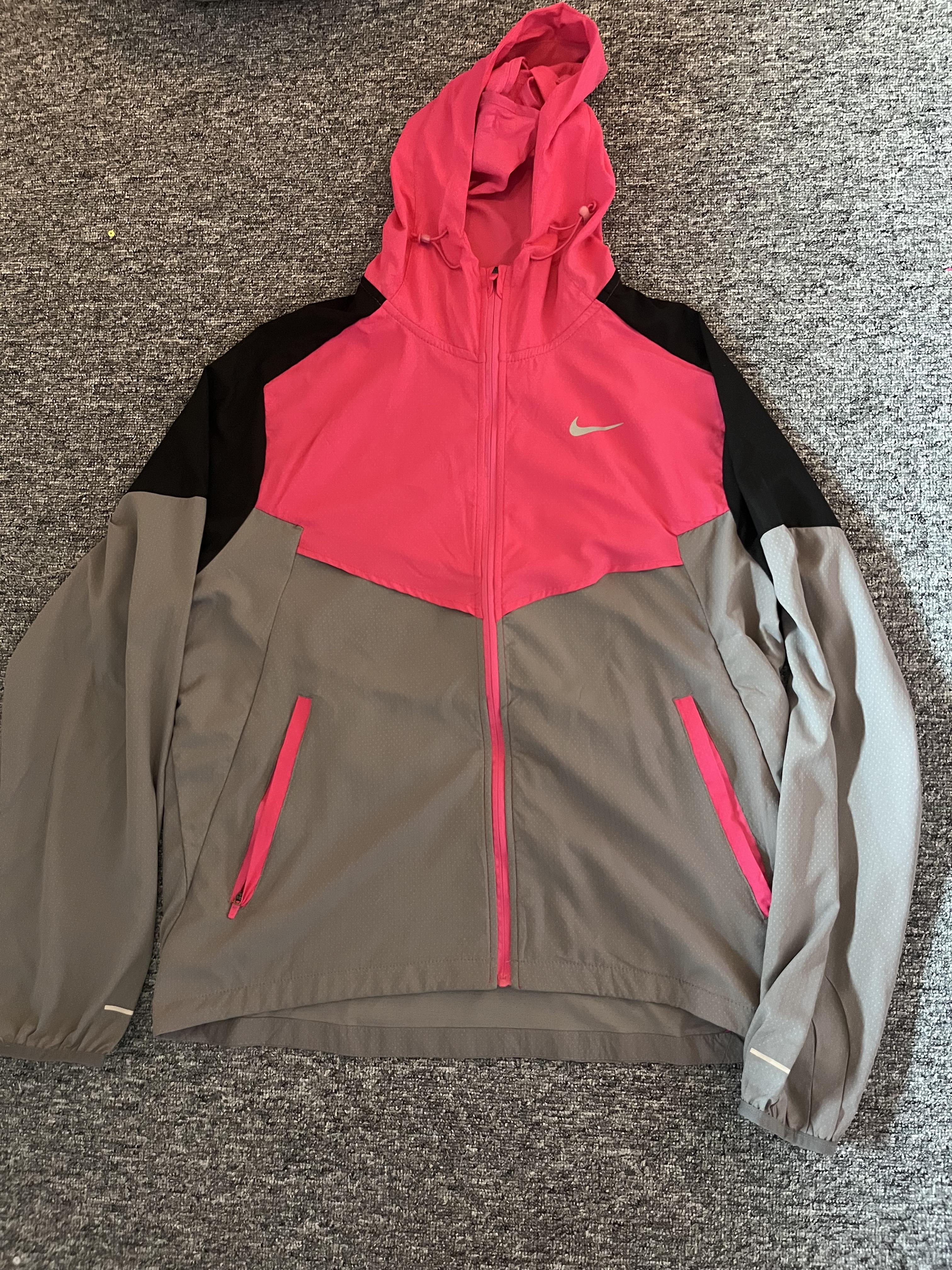
Buyer arrival photo from the Nike running clothing delivery. The central zipper, pocket positions, hood and contrasting panels are visible. This is useful for comparing layout and appearance.
The picture cannot prove rain protection, breathability or warmth. It does not show the full lining or a measured chest width. If one of those features decides your purchase, get the product specification or a relevant closer view rather than inferring it from the colour-block design.
Check warehouse photos before packing
Review the selected model, colour, size label and visible construction. Ask for a clearer view if the lining or an important detail is missing. Use the warehouse photo guide for inspection limits and requests.
Understand parcel volume
Bulky outerwear can increase the space a parcel needs. Chargeable shipping weight may depend on packed dimensions as well as actual weight. Use the current route rules and parcel estimate rather than comparing product prices alone.
| Packing question | Why it matters |
|---|---|
| Can the item be compressed? | It may change volume and the garment’s condition |
| Is extra packaging necessary? | It can add space and weight |
| Will it ship with shoe boxes? | The combined parcel may be much larger |
| What are the packed dimensions? | They may affect the route’s chargeable weight |
Confirm which packing services are available and whether they suit your garment. The shipping guide explains weight, packing and consolidation.
Worked example: why bulky packing changes the comparison
The following parcels are hypothetical. Using the illustrative divisor of 5000 described in DHL’s weight and dimensions explanation, volumetric weight is calculated from the parcel’s external dimensions in centimetres.
| Example | Actual weight | Packed dimensions | Calculated volumetric weight |
|---|---|---|---|
| Bulky parcel | 3 kg | 50 × 40 × 30 cm | 12 kg |
| Smaller parcel | 3 kg | 50 × 40 × 20 cm | 8 kg |
The bulky example is 50 × 40 × 30 / 5000 = 12. A route using the greater of actual and volumetric weight would not treat that parcel as only 3 kg. Confirm your own route’s divisor, rounding and rates; this table is not a shipping quote or a promise that compression will achieve the smaller dimensions.
Packing questions to settle before submission
Ask whether the garment can be packed more compactly without harming details you want to preserve. Structured panels, trims and filling may need different handling from a simple fabric shell. Confirm suitable services rather than requesting maximum compression without context.
If combining a jacket with shoes, consider the whole parcel. Keeping every shoe box may determine its dimensions even if the jacket folds down easily. Ask for the packed measurements and compare the applicable route estimates after the packing decision. A lower product price does not necessarily produce a lower delivered total.
Browse jackets to compare products, then review your own parcel estimate before arranging shipping.